
.svg)


Free zones in Egypt and the world

When industrial companies and investors evaluate locations for expansion, manufacturing, export operations, or regional distribution, the comparison should not be limited to the rental rate per square meter. The real decision is more strategic. Serious investors compare location, operating cost, tax and customs treatment, speed of procedures, proximity to ports and airports, labor availability, trade agreements, infrastructure, and access to domestic and regional markets.
From this perspective, Egypt’s free zones stand out as one of the most relevant investment platforms in the region. Their strength does not come only from tax and customs incentives. It comes from a combination of advantages that is not easily found in many other free zones around the world: a strategic geographic location, direct relevance to the Suez Canal, a large domestic market, a wide network of trade agreements, competitive operating costs, improving infrastructure, and a regulated legal framework supervised by the General Authority for Investment and Free Zones, known as GAFI.
However, the comparison must remain professional and balanced. Egypt’s free zones should not be presented as superior to every free zone in the world in every respect. Some global free zones have stronger digital administration, deeper port integration, more advanced logistics ecosystems, or more mature industrial clusters. The true competitive advantage of Egypt lies in the balanced combination of location, cost, market access, trade agreements, incentives, and export capability.
This is what makes Egypt particularly relevant for manufacturers, exporters, logistics operators, technology service providers, and investors seeking a regional operating base that can serve Africa, Europe, the Middle East, and selected global markets.
Egypt’s Geographic Position and the Suez Canal
Egypt’s first and most obvious advantage is its location. The country sits at the intersection of Africa, Asia, Europe, and the Middle East. This is not merely a geographic statement; it creates direct economic value for companies that depend on supply chains, maritime trade, and cross-border movement of goods.
The Suez Canal gives Egypt a central role in global trade, particularly in maritime routes connecting Asia and Europe. Therefore, Egypt’s free zones, especially those close to ports and transport corridors, should not be seen as isolated real estate locations. They are part of a broader logistics platform that includes the Suez Canal, Mediterranean ports, Red Sea ports, national road networks, and industrial zones.
For an industrial company, this means that Egypt can serve as a manufacturing, assembly, and export base to multiple markets from one location. For an investor, it means that demand for industrial and logistics space in and around Egyptian free zones is not driven only by local demand, but also by regional and international trade flows.
A Wide Network of Trade Agreements
One of Egypt’s strongest advantages compared with many countries that operate free zones is its broad network of trade agreements. Companies operating in Egypt may benefit not only from the internal advantages of the free zone regime, but also from trade agreements that provide access to multiple markets, subject to rules of origin and the specific conditions of each agreement.
Egypt’s trade framework includes agreements such as COMESA, the Agadir Agreement, the Greater Arab Free Trade Area, the Egypt-European Union Association Agreement, EFTA, MERCOSUR, the African Continental Free Trade Area, and other trade arrangements depending on the activity and target market.
This point is critical for manufacturers. The opportunity is not only to operate inside a free zone with certain tax and customs advantages. The larger opportunity is to design a supply chain that allows production in Egypt to reach Arab, African, European, and Latin American markets under the relevant rules.
This gives Egypt an important advantage over many free zones that may offer attractive incentives but do not provide the same depth of market access or the same ability to connect several trade regions from one production base.
A Large Domestic Market Combined with an Export Platform

Many free zones around the world are located in small economies or limited domestic markets. These zones may be excellent for re-export, transit trade, or logistics activities, but they do not always provide investors with a large domestic market that can support long-term growth.
Egypt offers both: a large domestic market and a regional export platform. This combination is highly relevant for industrial companies. A company may begin with an export-oriented model and later assess opportunities to supply the domestic market in accordance with the rules governing sales from free zones into Egypt. Alternatively, it may use Egypt as a production base for foreign markets while benefiting from local labor, suppliers, and professional services.
This makes industrial investment in Egypt more flexible than in free zones that depend mainly on transshipment or re-export activities without a significant domestic economy behind them.
Types of Free Zones and Industrial Zones in Egypt
Strong Customs and Tax Treatment within a Regulated Framework
Projects operating under Egypt’s free zone regime benefit from important incentives, including exemptions related to capital assets and production requirements necessary for the licensed activity, as well as special treatment for imports and exports from and to foreign markets, subject to the law, executive regulations, and the project’s license.
These incentives are particularly relevant for companies that import raw materials, components, machinery, or production inputs, then manufacture, assemble, package, or export finished or semi-finished products.
However, the value is not in the incentive alone. Many free zones worldwide offer tax and customs advantages. The difference in Egypt is that these advantages are connected to a large market, a strong geographic position, trade agreements, ports, and a labor base. The incentive therefore becomes part of a broader operating system, not merely a standalone financial benefit.
A realistic approach is still required. Free zones do not mean the absence of all financial obligations. There are fees and regulatory requirements that differ according to the nature of the activity, whether storage, manufacturing, assembly, or services. Each company should therefore assess the full cost structure before making an investment decision.
Infrastructure and Geographically Diverse Free Zones
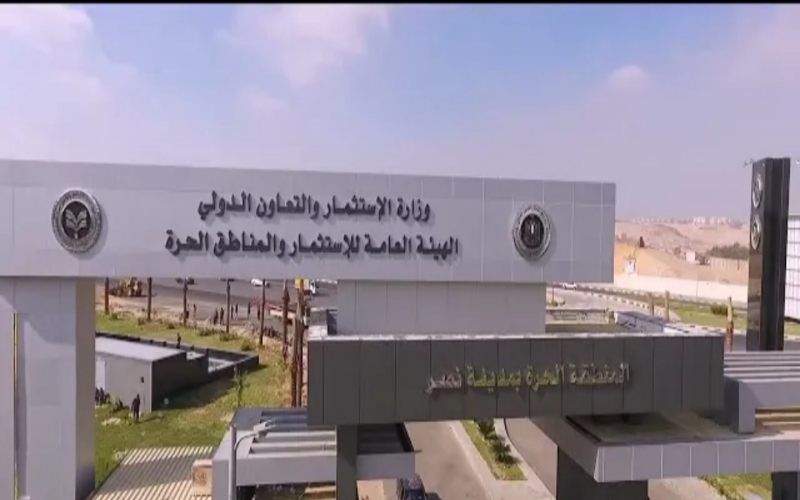
Egypt has several public free zones distributed across different strategic locations, including Alexandria, Nasr City, Port Said, Suez, Ismailia, Damietta, Shebin El-Kom, Qift, and the Media Public Free Zone. This geographic diversity gives investors several options depending on the activity and supply chain.
Companies requiring proximity to Mediterranean ports may consider Alexandria, Port Said, or Damietta. Companies connected to the Suez Canal corridor and Red Sea routes may examine Suez or Ismailia. Companies that require proximity to senior management, professional services, Cairo International Airport, and qualified administrative talent may find Nasr City particularly attractive. Other industries seeking competitive costs and proximity to labor in the Delta or Upper Egypt may consider locations such as Shebin El-Kom or Qift.
The advantage is that Egypt does not offer a single free zone model. It offers a network of locations, each with a different operating and investment profile.
Improving Ports and Logistics Performance
No free zone can be properly evaluated without assessing the surrounding ports, roads, and logistics ecosystem. Investors are not looking for tax incentives alone. They are looking for the practical ability to import inputs, move goods, and export finished products on time and at a competitive cost.
In recent years, Egypt has invested significantly in roads, ports, transport corridors, and logistics infrastructure. East Port Said Port has also achieved strong performance in global container port rankings, reflecting improved operational efficiency and the growing ability of Egyptian ports to serve international trade.
This gives Egyptian free zones an important advantage over free zones in some emerging markets that may offer incentives but suffer from weak port performance, slow logistics services, or limited internal connectivity.
Egypt’s Free Zones Are an Operating Export Platform, Not a Theoretical Model
One of the strongest arguments in favor of Egypt’s free zones is that they already operate as a real export platform. GAFI has indicated that Egypt’s free zones contribute a significant share of the country’s merchandise exports, with Alexandria Public Free Zone leading Egypt’s free zones in terms of export value.
This is highly relevant for international investors. There is a major difference between a free zone announced as a future project and a free zone system that already hosts companies, factories, warehouses, exports, and employment.
For a foreign investor, an operating track record reduces risk. For an industrial company, the presence of companies already working within the system means that administrative and procedural experience exists and can be built upon.
Usufruct Rights in Lands Commercial and Industrial in Egypt
Capacity to Serve Both Traditional Manufacturing and Digital Services
A future-oriented advantage of Egypt’s free zones is that they are no longer limited to traditional manufacturing, storage, garments, or assembly. The model is evolving to include software companies, service exports, artificial intelligence applications, and startups.
GAFI has announced the allocation of space inside Nasr City Public Free Zone to host startups working in software exports and artificial intelligence applications. This is an important development because it opens the door to a new free zone model: not only factories and warehouses, but also operating offices, development centers, and digital service export platforms.
This evolution strengthens Egypt’s ability to compete in the global services economy, particularly as Cairo has a large base of engineers, developers, technical service providers, and young talent.
A Professional Comparison with Global Free Zones
International reports, including those issued by UNCTAD, show that the number of special economic zones and free zones worldwide has expanded significantly. They also show that success does not depend on incentives alone. Many zones underperform when they rely only on tax exemptions without strong infrastructure, effective governance, economic linkages, or a clear industrial strategy.
From this perspective, Egypt should be assessed not only on tax treatment, but on the full investment platform. Egypt has location, market size, trade agreements, labor, operating free zones, improving ports, a specialized investment authority, and a relatively clear legal framework.
These elements make Egyptian free zones more competitive than many zones that offer headline incentives without sufficient operational depth.
At the same time, the comparison must remain balanced. Some global free zones outperform Egypt in technology, digital administration, customs speed, financial services, or integration with world-leading ports. Egypt should therefore not be marketed as the best in every category. It should be presented as one of the most balanced options for companies seeking competitive cost, strategic location, large market access, and export potential.
Which Companies Benefit Most from Egypt’s Free Zones?
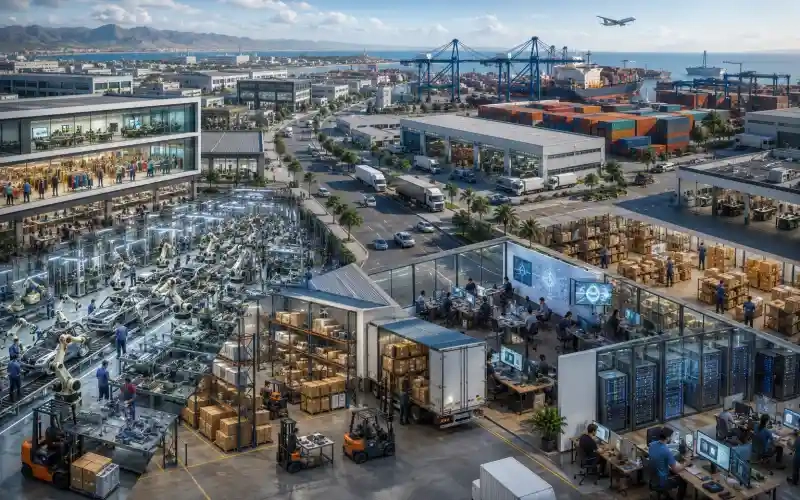
Egypt’s free zones are particularly suitable for several categories of companies.
They are highly relevant for export-oriented manufacturers, especially in ready-made garments, textiles, automotive components, light engineering industries, electronics, packaging, and industries that import inputs and re-export finished or semi-finished products.
They are also suitable for warehousing, re-export, and logistics companies, particularly those that require locations near ports, Cairo, or the Suez Canal corridor.
In addition, they are increasingly relevant for software companies, digital service exporters, outsourcing firms, and artificial intelligence companies, especially where the activity is directed toward clients outside Egypt.
However, companies selling entirely or mainly into the domestic market should carefully assess whether the free zone regime is the right structure for them, since selling from a free zone into the local market is subject to specific rules and obligations.
The Role of NileEstate as a Reference for Investors and Industrial Companies
In this type of investment decision, it is not enough to search for a property advertisement or compare the price per square meter. Investors need to understand the relationship between the property, the activity, the procedure, the cost, and the feasibility of operation.
This is where NileEstate plays an important role as a specialized platform helping companies and investors identify units and spaces inside Egypt’s free zones, industrial zones, and commercial districts.
The value of NileEstate is not limited to listing available units for rent or sale. It lies in helping companies compare alternatives, understand location differences, arrange inspections, review initial data, and assess whether a unit is suitable for the required activity.
An industrial company is not looking for space only; it is looking for operationally viable space. A software company is not looking for an office only; it is looking for a framework that supports growth and service exports. An investor is not looking for price only; the investor is looking for an asset or operating opportunity with growth potential.
For this reason, NileEstate real estate aims to serve as a practical reference for local and international investors and companies searching for opportunities inside Egypt’s free zones, combining real estate information, field experience, and an understanding of procedures and operational requirements.
Conclusion
Egypt’s free zones offer a real competitive advantage when assessed as a complete operating platform, not merely as a tax incentive regime. Their strength comes from Egypt’s position on the global trade map, its connection to the Suez Canal and major ports, its network of trade agreements, its large domestic market, competitive operating costs, and the diversity of its free zone locations and sectors.
While some global free zones may outperform Egypt in specific areas, Egypt’s strength lies in combining several factors that industrial investors need: proximity to markets, export capability, competitive operating cost, access to a large domestic economy, and a regulated legal framework.
Egyptian free zones therefore represent an important opportunity for manufacturers, exporters, logistics operators, software companies, and service exporters, provided that the location, unit, activity, and licensing structure are selected based on careful analysis rather than price alone.
Through NileEstate, investors and companies can gain a clearer view of available opportunities inside Egypt’s free zones and turn the search for space into a safer, more professional investment and operating decision.
0 Comments
Recent Blogs

A Project Sheikh Zayed
Read more

Free Zones in Egypt
Read more

Usufruct Rights in Commercial and Industrial Land in Egypt
Read more

Types of Free Zones and Industrial Zones in Egypt
Read more

Egypt’s New Investment Laws 2026
Read more
Nasr City Public Free Zone
Read more
Popular Tags
- Egypt’s Geographic Position and the Suez Canal
- A Wide Network of Trade Agreements
- A Large Domestic Market Combined with an Export Platform
- Strong Customs and Tax Treatment within a Regulated Framework
- Infrastructure and Geographically Diverse Free Zones
- Improving Ports and Logistics Performance
- Egypt’s Free Zones Are an Operating Export Platform, Not a Theoretical Model
- Capacity to Serve Both Traditional Manufacturing and Digital Services
- A Professional Comparison with Global Free Zones
- Which Companies Benefit Most from Egypt’s Free Zones?
- The Role of NileEstate as a Reference for Investors and Industrial Companies
Leave Comment